

Coffee and tea are easy to bundle because people already buy them in habits. They finish a bag, then reorder. They try a new roast, then want a second one. They give a mug and a bag of beans as a gift.
A good coffee bundle or tea bundle meets one of those habits. The discount helps, but it is not the whole reason the products belong together.
Below are 12 ideas for Shopify coffee and tea stores. Each one has a suggested product mix, the offer format that fits, and a short line of customer-facing copy you can adapt. The prices in the examples are made up, so use your own costs.
How to choose a coffee or tea bundle format
Before the ideas, a quick map of the formats. They behave differently in the cart and in inventory, so pick the one that matches the offer.
- Quantity break: buy more of the same product for a better price per bag. Good for staples. Our Shopify quantity breaks guide covers the setup.
- Fixed bundle: a set list of products at one price, such as a three-roast sampler.
- Buy X Get Y: buy two bags, get a third free or discounted. See our Buy X Get Y guide.
- Free gift: a qualifying order unlocks a gift, such as a tumbler. See our free gift with purchase guide.
For the differences between them, read our Shopify product bundle types guide.
Coffee bundle ideas
1. The three-roast sampler
Mix: a light, a medium and a dark roast in smaller bags. Format: fixed bundle. Why it works: new customers do not know which roast they like. A sampler lowers the risk of the first order and tells you which roast to promote next. Copy to try: "Not sure which roast is yours? Try all three." Merchant check: keep the single bags available, so the sampler does not hide your core range.
2. The stock-up tier
Mix: the same bag in 1, 3 and 5 quantities. Format: quantity break with a higher discount at each step. Why it works: regulars drink through a bag in a few weeks. A "Buy 3" tier fits how they already shop. Copy to try: "Buy more, save more. Same fresh roast."
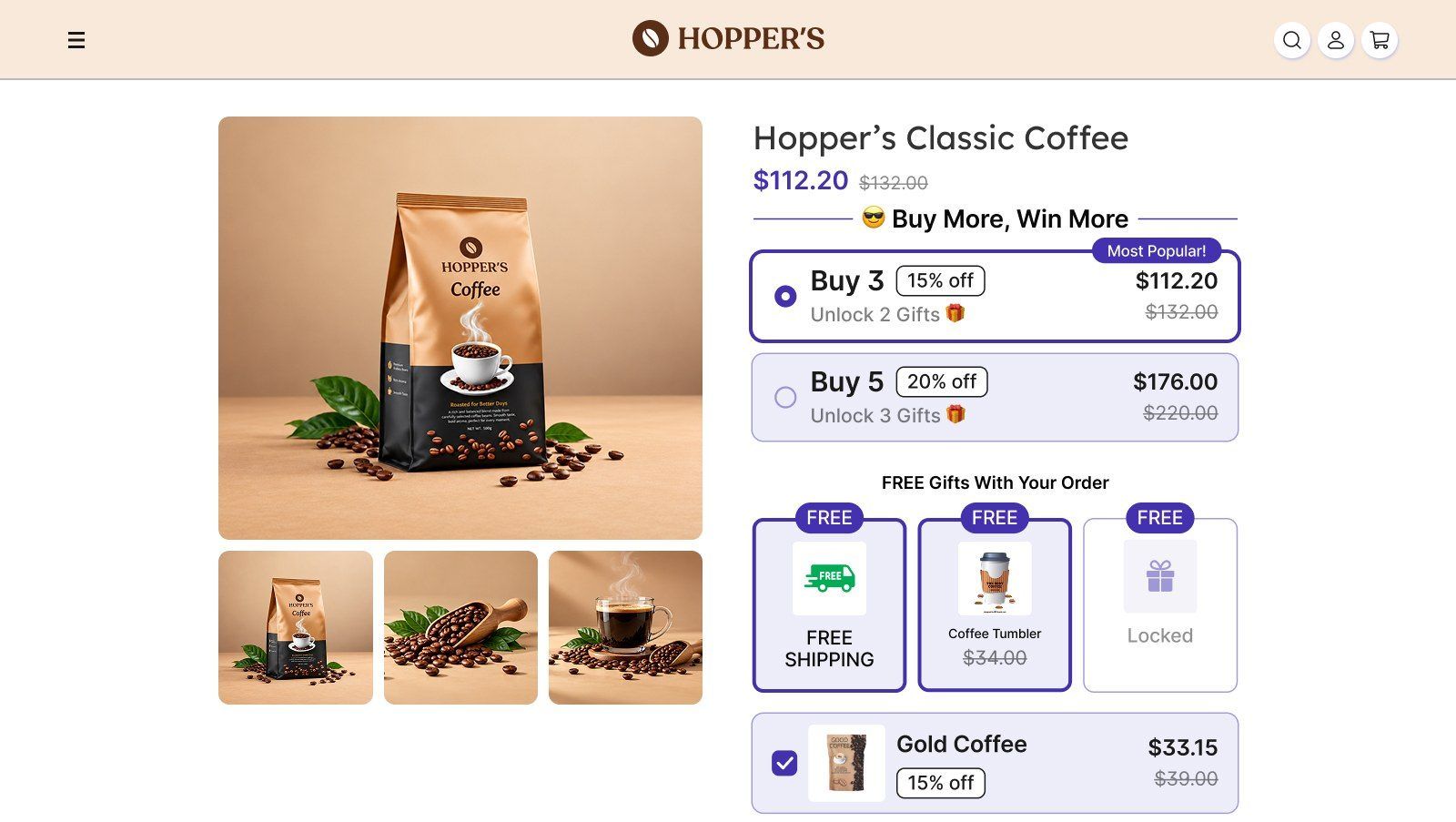
In the template above, the bigger tiers unlock free gifts. That is a good way to reward a larger order without discounting the coffee further.
3. The brew-method kit
Mix: beans, filters and a scoop or small tool for one brew method, such as pour-over. Format: fixed bundle. Why it works: the shopper is buying a way to make coffee, not only the beans. The kit solves the whole job. Merchant check: make sure the accessories are in stock, because a bundle is only available when every part is.
4. The grind choice bundle
Mix: one roast, with a grind option per bag (whole bean, filter, espresso). Format: bundle with variant choices. Why it works: two shoppers who like the same roast often grind differently. Letting them choose per bag avoids returns and mistakes. See our bundle variants guide.
5. Buy 2, get a third bag free
Mix: three bags, one of them free. Format: Buy X Get Y. Why it works: "free" is a stronger message than "33% off", even when the math is similar. Merchant check: do the margin math first. One bag in three at no charge is a deep discount. A smaller reward, like a free sample, may be enough.
6. The free tumbler tier
Mix: a Buy 3 tier that includes a travel tumbler. Format: quantity tier with a free gift. Why it works: the gift has a clear value, and it moves a shopper from two bags to three. Copy to try: "Buy 3 bags and your tumbler is on us."
7. The seasonal blend duo
Mix: a limited holiday blend and your best seller. Format: fixed bundle for a limited time. Why it works: the seasonal product gets attention, and the best seller carries trust. Assign a start and end date so the offer does not outlive the blend.
Tea bundle ideas
8. The tea sampler flight
Mix: four or five single-serve pouches of different teas, such as black, green, herbal and oolong. Format: fixed bundle. Why it works: tea shoppers love to explore. A flight lets them discover a favorite without committing to a full tin. Copy to try: "Five teas, one box. Find your favorite."
9. The matcha starter set
Mix: matcha powder, a whisk and a bowl. Format: fixed bundle. Why it works: matcha has a barrier to entry. Beginners do not know what tools they need. The set removes that doubt.
10. The tea pack tiers
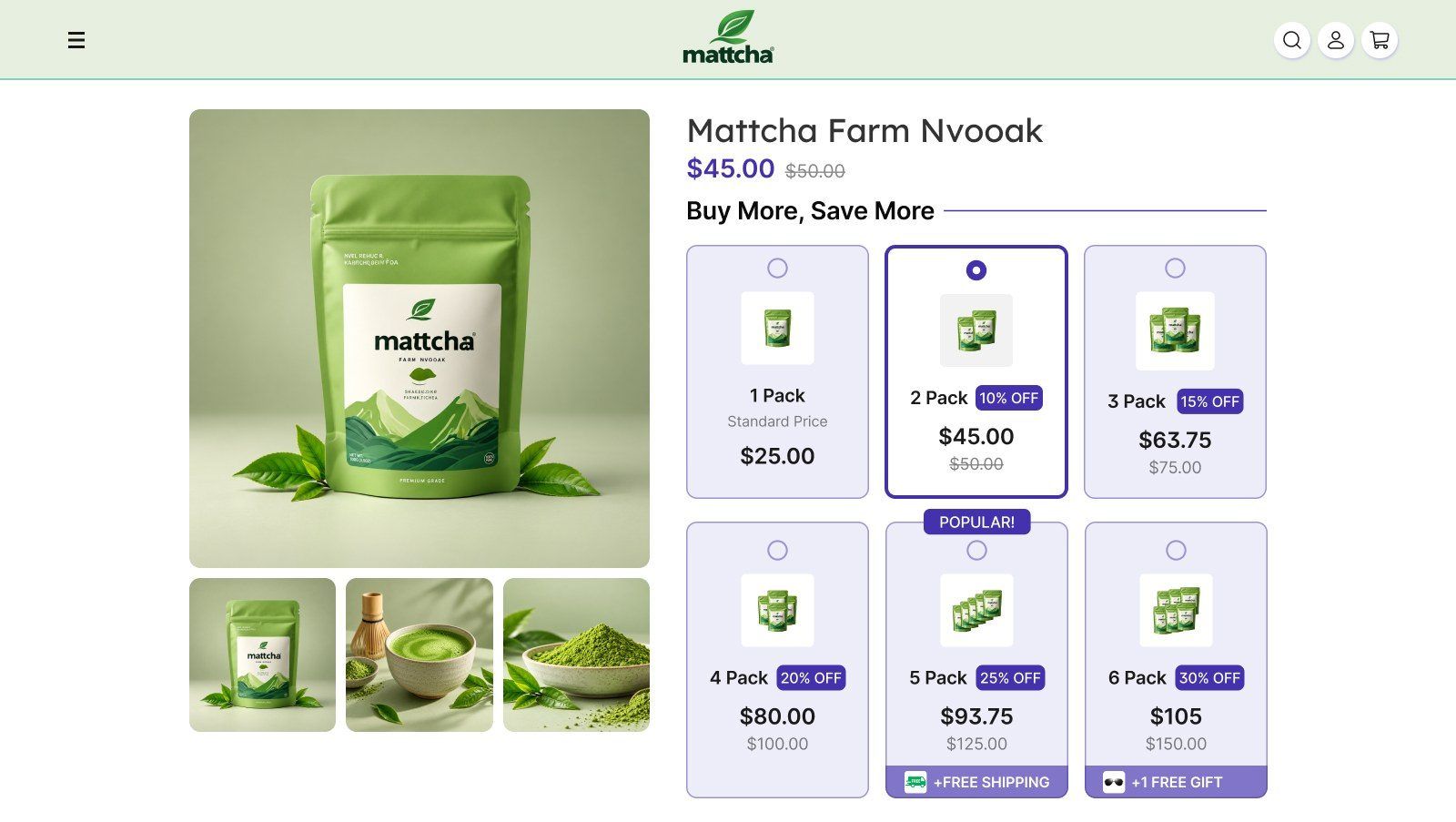
Mix: one tea in 1, 2, 3, 4, 5 and 6 pack options. Format: quantity break with pack tiers and badges. Why it works: shoppers see the saving grow with every pack. A "Popular" badge on the middle pack guides most people to it.
11. The evening wind-down pair
Mix: a caffeine-free tea and a small tin of honey or biscuits. Format: fixed bundle, cross-sell. Why it works: it sells a moment, not a product. Pairings like this lift the basket size without feeling pushy.
12. The office or team box
Mix: a larger bag of coffee or a box of tea bags for a shared kitchen. Format: quantity break. Why it works: teams buy in volume and reorder. A clear price break at larger sizes helps a buyer justify the order.
Price your bundle before you publish it
Run a quick check so a popular bundle does not lose money. Here is an example with made-up numbers.
- A 3-bag stock-up tier sells for $54, which is 10% off $60.
- The coffee costs you $21 for the three bags. Packing costs $2.
- Shipping costs you $9, and you offer free shipping on this tier.
That leaves $54 minus $21, $2 and $9, or $22. If a single bag at full price leaves $14 after shipping, the 3-bag tier earns more per order even with the discount and the free shipping. That is the test: compare the whole order, not the discount percentage.
If you plan to offer free shipping on the bigger tiers, read our guide on free shipping with Shopify product bundles. For picking the quantities and percentages, see how to choose quantity break tiers.
Practical checks for coffee and tea stores
A few things are specific to food and drink.
- Freshness: coffee is best soon after roasting. If you bundle larger quantities, state the roast date or a roast-to-ship promise on the page.
- Shelf life: check the date on the tea or coffee you bundle, and avoid bundling stock that is close to its date.
- Variants: if you sell grind types or sizes, test every variant in the bundle, not just the first one.
- Weight and shipping: a 3-bag pack weighs more than a single bag. Update the product weight so shipping rates stay correct.
- Subscriptions: a subscription is a separate tool. A quantity tier or a bundle works for one-off orders. If you want recurring orders, you need a subscription app alongside.
Show the offer on the product page
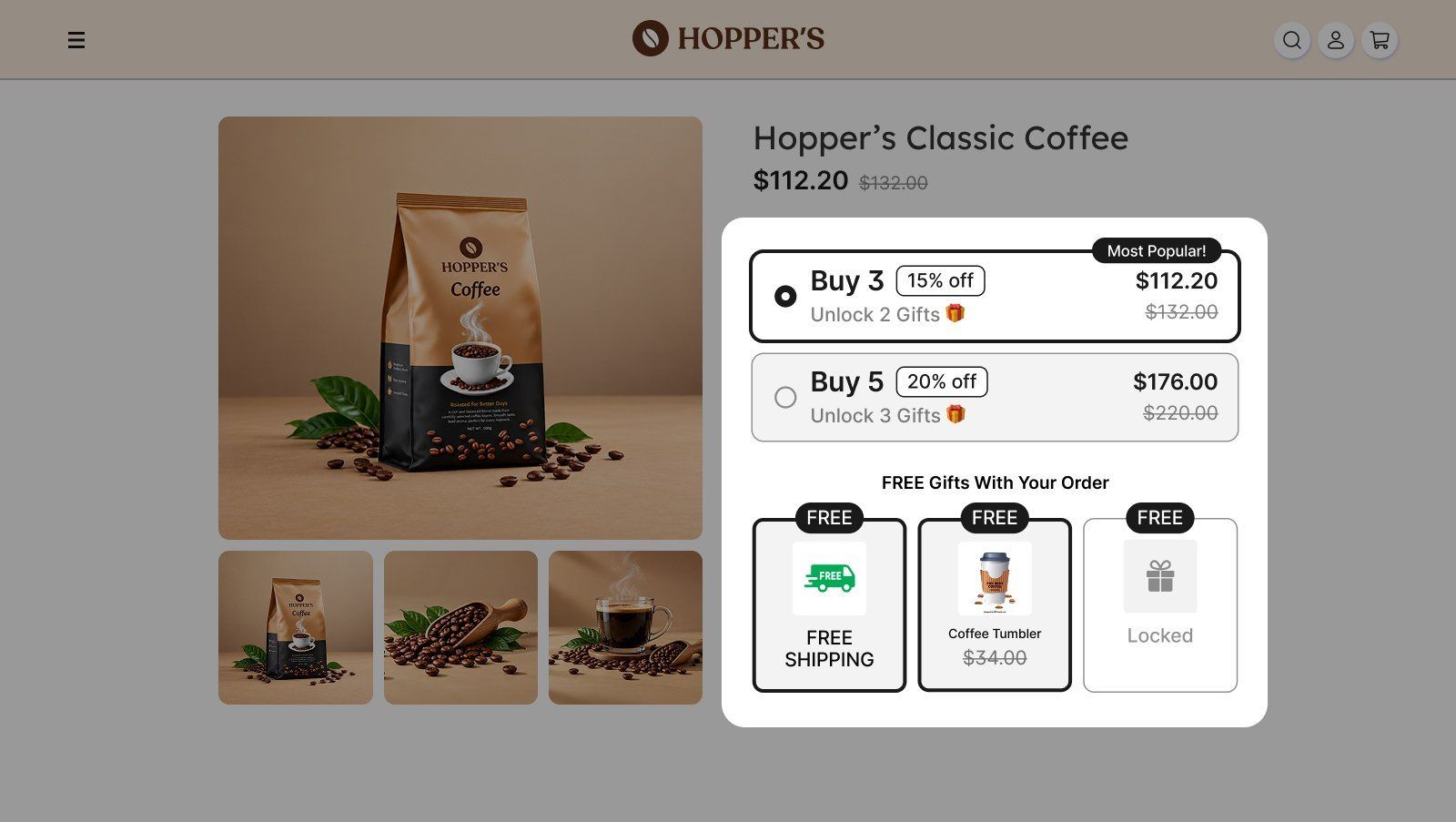
Shoppers should see the offer before they add to cart. A pack picker on the product page, with the saving shown next to each option, works better than a banner they might miss.
WowBundle is our app, and it is completely free, for life. It builds quantity breaks, bundles, Buy X Get Y offers, free gifts and add-ons, and it shows a live preview before you publish. You can learn more on the WowBundle product page.
Before you launch, work through our bundle launch checklist. If you want more format ideas for another category, our skincare bundle ideas follow the same structure.
FAQ
What is a good coffee bundle for a new Shopify store?
Start with a three-roast sampler or a simple stock-up tier. Both are easy to explain, and the sampler tells you which roast your customers prefer.
Should I offer free shipping on coffee bundles?
It works well on a larger tier, because it gives shoppers a reason to buy more. Run the margin check first, and keep the smaller tier without it, so the bigger one has a clear advantage.
How much discount should a tea bundle have?
There is no universal number. Start with a small step between tiers, then check your sales and margin. Our guide to fixed-price bundles vs percentage discounts helps you choose how to show the saving.
Can I let customers choose the grind in a bundle?
Yes, if your bundle app supports variant choices per item. Test every grind option at checkout before you publish.
Do I need an app to sell coffee bundles on Shopify?
Not for simple cases. You can create a native quantity discount in Shopify. An app helps when you want the pack picker, tier rewards and gifts on the product page.
Where to start
Pick one product and one idea. For most coffee and tea stores, that means a sampler or a stock-up tier on a best seller. Price it, preview it, test the checkout, and look at the results after two weeks before adding another offer.